Showing posts with label Alyson's Blog. Show all posts

Wednesday, November 27, 2019

The Fat Portrayal

Image result for Fat amy
Fat Amy from the movie Pitch Perfect

Fat Amy provided comic relief in the movie Pitch PerfectThis Is Us’s character, Kate, is constantly battling seen battling with her weight. The main character from Insatiable turns to revenge against those who fat-shamed her after achieving the ultimate ‘hot body’. Fatness in media, particularly through movies and shows, define their characters by their weight or weightless. Their weight remains a focus of the character and their respective development, or lack thereof throughout the story. Yet, why do these character’s weight need to define their storylines? Why are the characters shown to struggle with weight all female? Why are the characters and their stories all defined by their weight? 

Television and movies with an overweight character always seem to focus on the weight of the person. The media’s fatphobia is like a double edge sword  in that the portrayals of fat people, specifically women, not only is developed due to a fear of fat, but also continues to perpetuate the disapproval of fatness. Fat is always seen as a vice of a character. It is something they struggle to overcome yet feel pressure to overcome it. It is how they, specifically women, are defined. The constant fatphobic portrayals of fatness, specifically fat women, not only reflect the patriarchal view of beauty, but also cultural beliefs of fat women. 

Bridget Jones is a character looking for love and trying to turn her life around, through finding a boyfriend. While this may seem like a typical storyline, there are numerous comments about her weight throughout, posing her weight as an issue that must be overcome in her quest for happiness. Her concern about her weight is a tool the writers used to demonstrate her unhappiness in life and with herself. However, the implications of her bumbling efforts to improve her life imply that she needs to lose weight to be happy and accepted. Despite not actually being fat or overweight, the feeling that she needs to lose weight is a reflection of how many women in real life feel about their own weight. Being overweight is not considered beautiful and instills a sense of unworthiness as seen through the character. The fear of being considered or labeled as fat holds a lot power over how people perceive and accept themselves and others. 

Related image
Fat Monica from the television show Friends
The labeling of fat is evident in several media portrayals. For instance, in the show Friends, Monica is constantly teased for being fat growing up. Her fatness in adolescence is a running gag intended to elicit laughs in various episodes. The other characters within the show constantly insult and make jokes about ‘Fat Monica’. However, the storyline of Fat Monica is problematic for a number of reasons. For one, it defines and labels her character’s past self. It intends to make being fat something that is funny and to be laughed at. Also, it insinuates that her fatness was an issue and something that she had to change to overcome her laziness. Additionally, the label of Fat Monica puts her character in a box. It limits her character to simply being defined as fat and nothing else, while also carrying with it the negative associations we make in regards to the word fat. 

Labeling people as fat, diminishes their other qualities as a person and prevents people from looking at an individual, especially women, as a whole. People are more than simply fat; they have personalities and feelings that go beyond the number on a scale. However, when television or movies define their characters by their weight, it perpetuates people in real life doing the same to others. Simply limiting a person because of their size takes away their power to exist in the same manner a person of a ‘normal’ weight would. 

To advocate for fatness, it must be addressed  properly in the media. Television and movies are huge influences on its audiences. They hold the ability to revolutionize how we as a society approach fatness and fight fatphobia, but yet continue to perpetuate the cycle of it through its characters. Media must move past simply showing women struggling with their weight and using fatness as a means to elicit laughs. Fat acceptance must start by improving the portrayal of people in media and ensure they are given the same level of depth as other characters so that they can be seen as more than just their size. 


Images taken from:  


Monday, November 4, 2019

Communication is Key


Horse can smell our fear and monkeys can use sign language. All animals have a unique way of understanding and communicating with people, whether it be through chemo-signaling, learned language, or squawking. Both skills are used by each animal as a means to communicate with people to develop a relationship with them, even though horses and monkeys may not be considered your typical house pets, like cats and dogs. 
Image result for horse face

Why do we considered other animals such as horses to be a simple farm animals, while dogs are considered a man's best friend? Why are some animals viewed as part of the family, while others are considered family dinner? Should we really consider animals as less than us, simply because they can’t use the same verbal language as people?  It is obvious that animals are different than people, yet  why are animals continuously depicted as helpless and stupid. Despite the differences, people can communicate with animals to develop relationships with them just as a person would do with their new neighbor. Relationships with animals are more than simply a dog as a pet, a goat on a farm, or beef on our plate. They can, and should be, deeper connections where both the animal and the person benefit from communicating and developing a bond with each other.  
A common anecdote told to any couple is that communication and work is the key to making a relationship last. Communication takes effort since it requires time to listen, talk, and learn about the other person. Building a relationship with someone does not occur overnight, and often builds upon nonverbal communication and actions. Spoken language is not the only form of communication. For instance, sign language is used widely around the world, with different locations having their own language. Like spoken language it must be learned and follows its own set of rules, similar spoken grammatical rules. However, it does also depend on facial expressions, and body language. The way in which a person, or animal, moves their body is telling  and a way to express a feeling, saying, or mood.
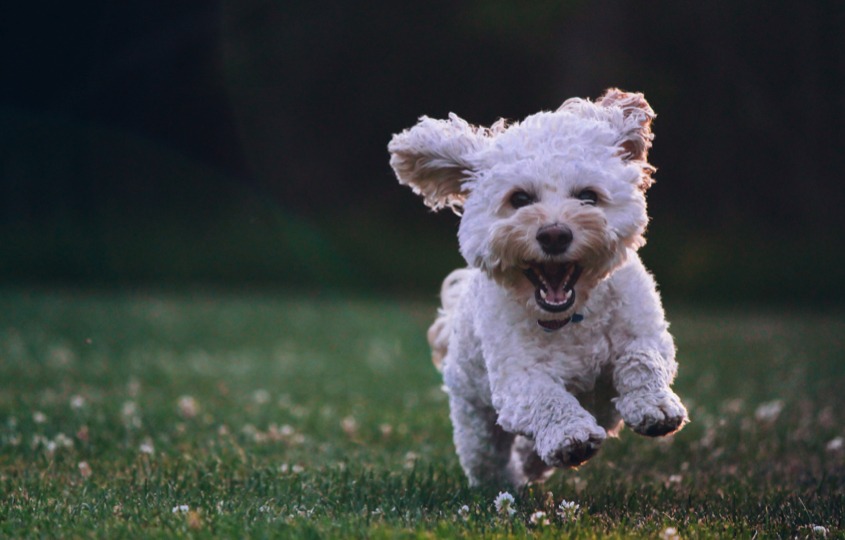
If actions speak louder than words in a meaningful relationship, why aren’t animals’ actions considered forms of communications to build relationships? Dogs come running straight to their owners, when they come home. The dogs may not be able to explicitly say “I’m excited to see you!” to their respective owners, but yet it is understood from their actions.  Jumping, running, barking, and spinning, are all actions that display a sense of excitement and joy. People are capable of interpreting facial expressions and body language for other people, therefore, they should be able to understand non-verbal forms of communication with animals to develop the relationships with animals.  


While some may think all animals are good for is a source of protein at dinnertime, people receive as much as they give to animals. Animals provide a source of comfort, a friend, and someone to talk to as discuss The Atlantic. The author states that people who talk to their pets do so as a means to build a meaningful relationship in their lives. Those who are lonely or have few other relationships in their lives with other people were found to talk to their pets, despite believing animals lack the ability to process language. While The Atlantic article cites studies utilizing dogs as the subject, people talk to all animals, not just their pets. Yelling a squirrel in the park to run away from you, is still a form of communication that the animals perceives as most often the squirrel will run in the opposite. Contrasting those that believe animals cannot process language, a dog will sit when told to sit, if trained to do so, which requires communication and effort. If one animal, like a dog, can understand language, shouldn’t it be safe to assume that all animals can understand language? Therefore, it the effort put into developing a relationship with a pet, should be given to all animals, as they can all give something back to people. 
Understanding language and utilizing various forms of communication such as moving the body, jumping, pointing, or making a noise, are the basis of building a relationship. Once that  understanding of each other actions is developed, a bond can be formed that allows animals to comfort people when they are upset or play with people to make them happy. This relationship fosters a dependence on one and another that proves the importance of animals as being more than simply serving a person’s needs. Animals and people are connected through the relationships built based on various forms of communication. Therefore the same respect and care given to other people when trying and communicating with each other, should be given to animals, since their relationships are equally as important in our lives.  


Image Taken From: horse-face.jpgOverly-excited-dog.001.jpeg 

Disability. You're Helping Too Much

Lamar Todd Professor Shaw WGSS 275 December 10, 2019 Blog #2: Disability. You’re Helping Too Much. On the CDC (center for dis...